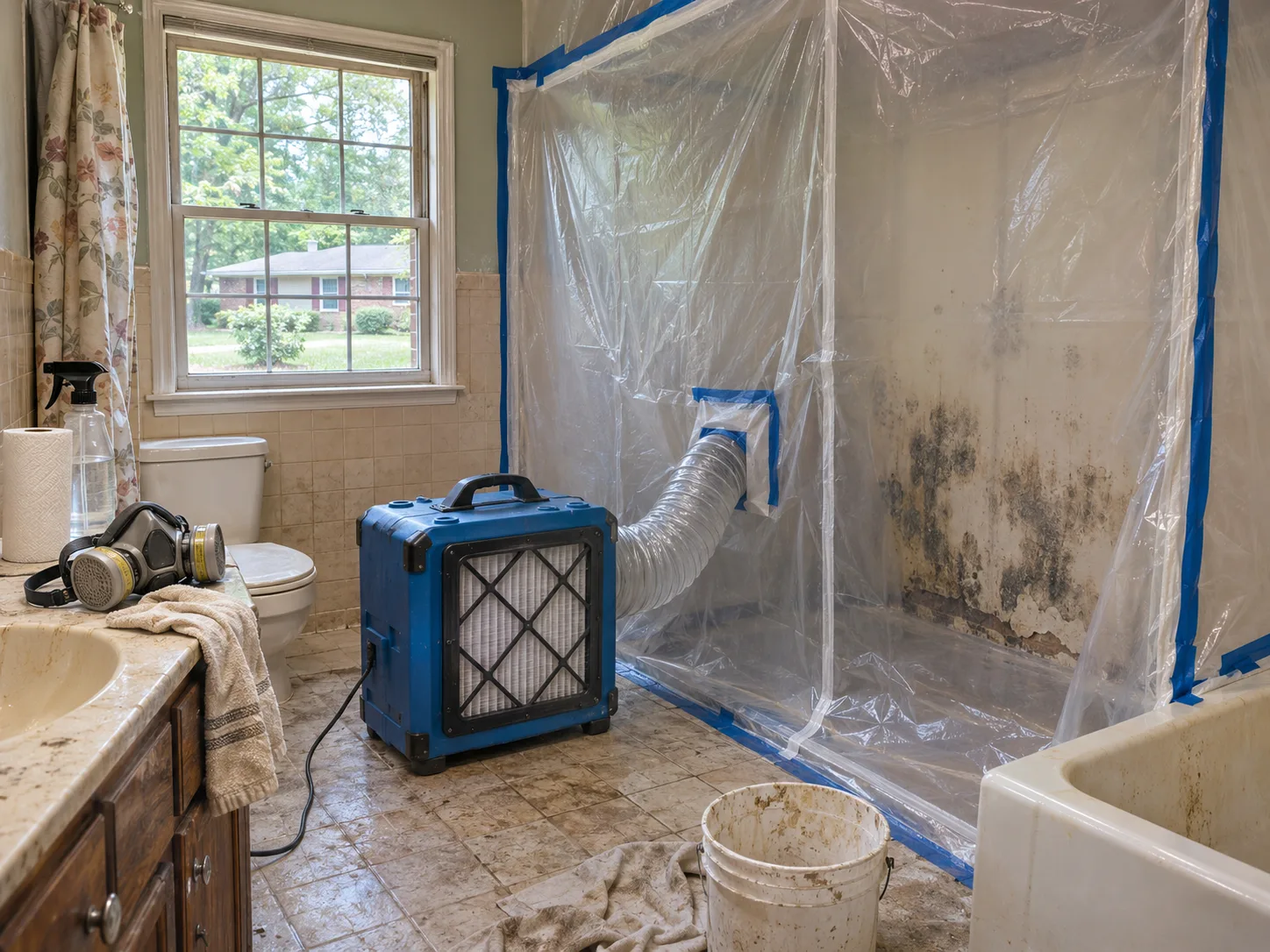
Mold follows water in Tuskegee almost every time. Our climate is humid subtropical with over 54 inches of rain a year, and when water sits in a wall cavity or under crawl-space insulation for more than 48 hours, the colony is already starting. By day 10 you can smell it, by day 30 you can see it on the paper face of the drywall. The job is not to hide it with bleach, the job is to contain the area, remove what's colonized, and verify the air is clean before we tear down the plastic.
In Macon County we see three big mold sources repeatedly. One, roof leaks over a Greenwood brick ranch that drip into an attic cavity nobody opens until the ceiling sags. Two, slow pipe drips under a Tuskegee University rental kitchen sink that fester for months behind the cabinet base. Three, crawl-space insulation that got wet during a storm and never dried, now hanging with surface growth on the batt paper. Each one is a different containment setup, but the principle is the same, negative air, HEPA scrubber, bag out, verify.
The thing we won't do is spray a chemical over visible growth and call it done. That's cosmetic. Mold spores live in the material, so colonized porous material has to come out. Studs and framing can usually be treated and dried back to safe, but drywall, insulation, carpet pad and wet cabinet base all get bagged and hauled. Every job ends with a post-remediation moisture reading and an inspection photo set so you can prove the work.
What we handle
Containment Setup
6-mil polyethylene barriers, negative air machines with HEPA filtration, and separate entry chambers so spores do not migrate to clean rooms during tear-out.
Colonized Material Removal
Drywall, insulation, carpet pad, cabinet base and trim with surface growth bagged and hauled under containment. Studs and framing treated and dried.
HEPA Air Scrubbing
Industrial air scrubbers run through the containment for the full job to reduce airborne spore count before clearance.
Antimicrobial Treatment
EPA-registered antimicrobial applied to remaining framing and sub-surfaces after physical removal. Not a substitute for removal, a finish step.
Crawl-Space Mold Treatment
The big Macon County call. Bagging soaked insulation, treating joists and subfloor from below, re-vapor-barriering the ground, and installing supplemental air movement to hold the space dry.
Post-Remediation Verification
Final moisture readings, visual inspection and photo set delivered to you. Third-party air testing available on request.
How the job goes
1. Inspection and Scope
Moisture meter, flashlight, and sometimes a borescope into the wall cavity. We map the extent of growth, source of water and contained square footage. Written scope in your hand.
2. Containment Build
Poly barriers up, negative air running, entry chamber zipped. Nothing leaves the work area without bagging. HVAC dampered off so spores do not ride the ductwork.
3. Removal and Treatment
Colonized porous material cut and bagged. Framing wire-brushed and treated. HEPA vacuum over every surface before antimicrobial application.
4. Drying and Verification
Air movers and dehumidifiers held until the framing reads dry. Containment stays up through verification. Final photos and moisture log handed over.
What's included
- Written containment plan and scope up front
- 6-mil poly containment with negative air
- HEPA air scrubbing for duration of work
- Bagged removal of colonized porous material
- EPA-registered antimicrobial on framing
- Crawl-space treatment where source is below
- Post-remediation moisture verification
- Photo documentation for insurance
What it costs
Most single-room mold remediation runs $500 to $3,500. Multi-room or whole-house crawl-space jobs run $3,500 to $12,000. Third-party clearance testing is extra.
| Job | Typical price | Notes |
|---|---|---|
| Single-room remediation | $500 to $3,500 | Under 100 sq ft colonized area |
| Multi-room remediation | $3,500 to $8,000 | 2 to 3 rooms, includes containment |
| Crawl-space mold treatment | $1,500 to $6,000 | Insulation removal plus antimicrobial |
| Attic mold remediation | $1,500 to $5,500 | Roof-leak sourced, batt replacement extra |
| Third-party clearance test | $350 to $600 | Optional, billed by independent lab |
Ranges are typical for Mold Remediation After Water Damage jobs in Tuskegee and confirmed with an exact written quote before any work starts.